Lapurifier Air Ionizer Review (2026): Is It Worth It?
Is the Lapurifier air ionizer worth buying? Explore how it works, its pros and cons, ideal uses, limitations, and how it compares with HEPA purification.
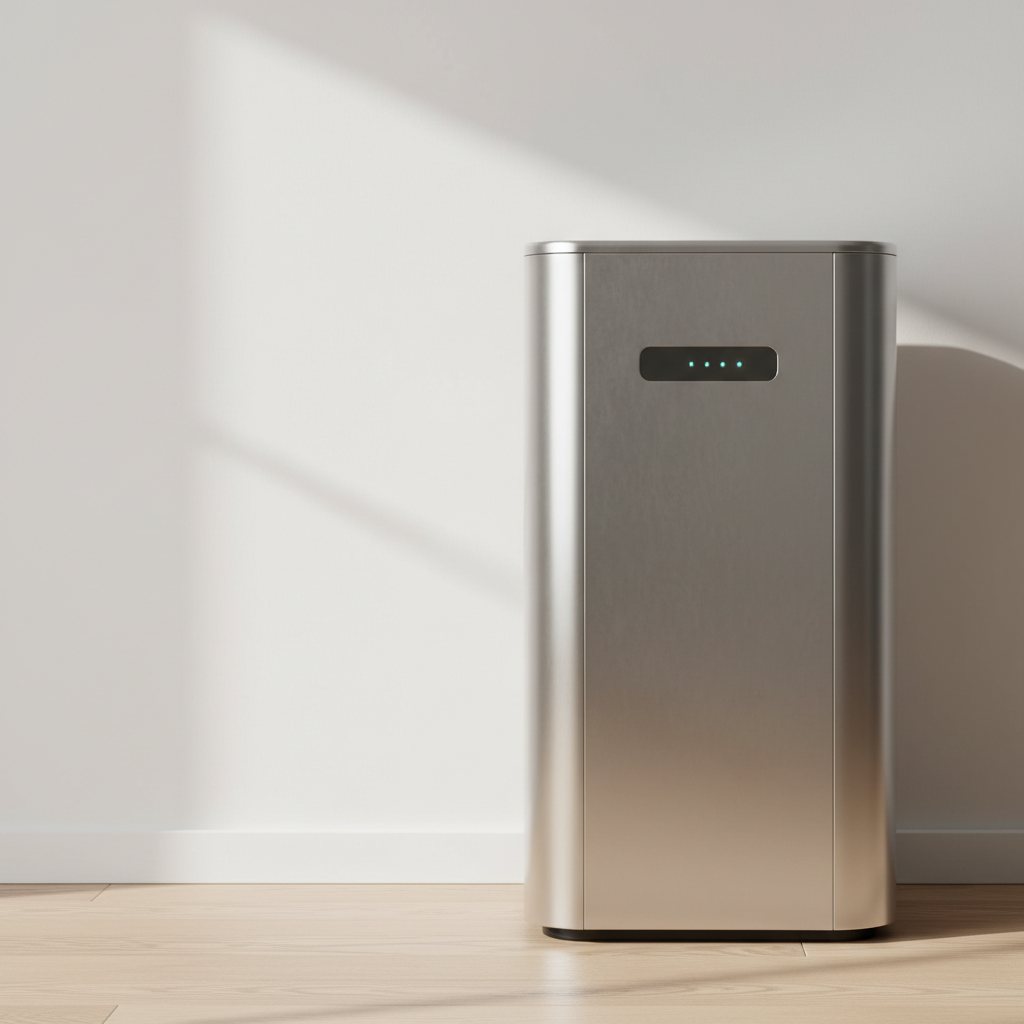
If you're considering the Lapurifier air ionizer, its biggest attraction is easy to understand: it's compact, filterless, quiet, and doesn't require the replacement filters associated with conventional air purifiers.
But there's an important distinction hidden behind that convenience.
An ionizer doesn't clean the air in the same way a HEPA purifier does.
So before buying the Lapurifier, it's worth understanding exactly what you're getting—and what you're not.
In this Lapurifier review, we'll look at how the technology works, where a compact ionizer makes the most sense, its advantages and disadvantages, and who would be better served by a HEPA air purifier instead.
Quick verdict: The Lapurifier is most interesting for buyers who specifically want a compact, quiet and filterless ionizer. If your priority is physically capturing dust, pollen, smoke and other particles, a HEPA purifier is the stronger choice.
What Is the Lapurifier Air Ionizer?
The Lapurifier is a compact air-cleaning device based primarily on ionization rather than conventional mechanical filtration.
Ionizers electrically charge particles suspended in the air. Those charged particles can then attach to surfaces or other particles rather than remaining airborne.
That's fundamentally different from a HEPA purifier.
A HEPA purifier uses a fan to pull room air through a physical filter, where particles become trapped. An ionizer generally doesn't provide that same mechanism for capturing and storing particles.
This difference should be one of the main considerations when deciding whether the Lapurifier is right for you.
Related: Read our [Portable Air Ionizer vs Air Purifier] guide for a more detailed explanation of the two technologies.
Key Features of the Lapurifier
Filterless Operation
One of the strongest practical advantages is the lack of disposable filters.
Traditional filtered purifiers eventually require replacement filters, creating an ongoing expense. A filterless ionizer eliminates that particular maintenance requirement.
That can appeal to someone who wants an air-treatment device that can simply be switched on without keeping replacement filters in stock.
Compact Design
Size is another advantage.
A compact device is easier to use where a conventional room purifier would be inconvenient, particularly around a desk or other small personal environment.
It also requires substantially less floor space than a typical HEPA purifier.
Quiet Operation
Mechanical air purifiers need airflow, which normally means running a fan.
Ionization doesn't depend on a large filtration fan in the same way, allowing devices in this category to operate very quietly.
For a bedroom or home office, that can be genuinely useful.
Low-Maintenance Design
There are no conventional filters to monitor and periodically replace.
You'll still need to clean the surrounding environment because ionization doesn't magically destroy dust, but routine ownership is relatively straightforward.
How Does the Lapurifier Work?
The easiest way to understand an ionizer is to imagine giving tiny particles an electrical charge.
Dust, pollen and other suspended particles normally remain airborne for varying periods. An ionizer releases charged ions into the surrounding air.
These interact with airborne particles and can make them more likely to:
attach to other particles;
settle onto floors and furniture;
adhere to nearby surfaces.
The important phrase here is settle onto surfaces.
The particles haven't necessarily disappeared.
That's why regular vacuuming and surface cleaning remain important when using an ionizer.
If you'd like to understand this technology in greater depth, see our guide: [Do Portable Air Ionizers Actually Work?]
Lapurifier vs HEPA Air Purifier: What's the Difference?
This is probably the most important comparison for prospective buyers.
Lapurifier / Ionizer
HEPA Air Purifier
Uses ionization
Uses mechanical filtration
Typically filterless
Requires a filter
Very quiet
Usually produces fan noise
Compact
Often larger
Low routine maintenance
Filters eventually need replacement
Encourages particles to settle
Physically captures particles
Best viewed as supplemental
Better suited to serious particle filtration
Neither technology should be judged solely on convenience.
If your priority is quiet operation and avoiding replacement filters, the Lapurifier concept has obvious advantages.
If your priority is removing airborne particulate matter, mechanical filtration has the stronger case.
Later in this guide we'll explain exactly who should choose each.
Where Does the Lapurifier Make the Most Sense?
Home Office
This is one of the more logical environments for a compact ionizer.
You're spending hours in a relatively confined area, silence matters, and you probably don't want another large appliance beside your desk.
For more options, see our guide to [Portable Air Ionizers for Office and Desk Use].
Bedroom
Quiet operation also makes an ionizer attractive for people who dislike hearing a purifier fan while sleeping.
However, anyone specifically trying to remove substantial quantities of allergens or fine particles should also consider a HEPA purifier.
Small Personal Spaces
The smaller the area, the more reasonable a compact ionizer becomes.
Expectations matter enormously here. A small ionizer shouldn't be purchased with the expectation that it will provide the same air cleaning as a powerful purifier designed to circulate an entire large room.
What We Like About the Lapurifier
No Replacement Filters
For many buyers, this is the headline feature.
You avoid both the inconvenience and recurring expense of buying replacement filters.
Minimal Noise
People working, studying or sleeping near the device may appreciate the absence of the constant fan noise associated with conventional purification.
Small Footprint
It's much easier to accommodate than a large purifier.
Simple Operation
There aren't complicated filter schedules or extensive controls to manage.
For someone specifically looking for simplicity, that's appealing.
What Could Be Better?
It Doesn't Provide HEPA Filtration
This is the biggest limitation and shouldn't be buried in the fine print.
Ionization and filtration are not interchangeable technologies.
If you're buying primarily because you want particles captured and removed from circulating air, look at a HEPA purifier instead.
Settled Particles Still Need Cleaning
Ionization can move the problem from the air to surrounding surfaces.
That means vacuuming and wiping surfaces remain important.
Limited Use in Larger Spaces
Compact ionizers make considerably more sense as personal or small-space devices than as whole-room air-cleaning solutions.
Ionizer Safety Deserves Consideration
Some ionizing devices can generate ozone as a byproduct. Buyers should therefore check the specific manufacturer's emissions information, certifications and operating instructions rather than assuming every ionizer performs identically.
We've covered this issue separately in [Are Portable Air Ionizers Safe?].
Lapurifier vs AirTamer A315
These products illustrate two different ways of using ionization.
Choose the Lapurifier if:
you primarily want something for a fixed location;
you prefer a compact stationary device;
filter-free operation is important;
you don't need something wearable.
Choose the AirTamer A315 if:
you travel frequently;
you want a wearable device;
personal portability is the priority;
you want something you can take through airports, hotels and public transportation.
Neither replaces a good HEPA purifier when substantial room filtration is required.
Read our full [AirTamer A315 Review] if portability is your priority.
Who Should Consider the Lapurifier?
I'd put it on the shortlist if you're looking specifically for:
a filterless ionizer;
quiet operation;
compact dimensions;
simple maintenance;
something for a small personal environment.
Those are the areas where the product category makes the strongest argument.
Who Should Skip It?
Consider a HEPA purifier instead if you're primarily concerned about:
capturing fine airborne particles;
significant pollen exposure;
smoke or wildfire particles;
larger-room purification;
measurable mechanical filtration.
That's not a criticism of the Lapurifier as much as choosing the correct technology for the job.
Is the Lapurifier Good for Allergies?
This question needs a nuanced answer.
Ionization may affect airborne particles including pollen and dust, but it doesn't capture those particles in a filter.
If allergen removal is your primary objective, HEPA filtration is generally the more appropriate technology because particles are physically captured.
A compact ionizer is better viewed as supplemental rather than a substitute for effective filtration.
Read our guide to [Portable Air Ionizers for Allergies and Travel] for more context.
Does the Lapurifier Remove Dust?
Not in the same way a filtered purifier does.
Ionization can cause airborne dust particles to settle more readily. You'll then need to remove that accumulated dust through normal cleaning.
A HEPA purifier, by contrast, draws particles into the device and captures them in its filter.
Does the Lapurifier Remove Odors?
Don't buy an ionizer solely as an odor-removal solution.
Odors can come from gases, volatile compounds and many other sources that aren't adequately addressed simply by causing particulate matter to settle.
For persistent odors, ventilation, source removal and an appropriate purifier—often incorporating activated carbon—may be more suitable.
Is a Filterless Air Ionizer Worth It?
It depends entirely on what you expect from it.
A filterless ionizer becomes attractive when your priorities are:
silence + simplicity + compactness + no replacement filters.
It becomes much less attractive when your priorities are:
high-volume airflow + physical particle capture + whole-room filtration.
Understanding that distinction before buying prevents most disappointment.
Lapurifier Pros and Cons
Pros
No replacement filters
Quiet operation
Compact design
Simple to operate
Low routine maintenance
Useful for small personal spaces
Cons
Doesn't provide HEPA filtration
Particles may accumulate on surrounding surfaces
Not the best option for large rooms
Not ideal for serious particulate or smoke filtration
Ionization safety specifications should be checked before purchasing
Where to Buy the Lapurifier
The Lapurifier is available online, including through Amazon.
Check the current Lapurifier price and availability on Amazon →
Prices and availability can change, so check the retailer for current information.
Frequently Asked Questions
Is Lapurifier a HEPA air purifier?
No. The model discussed here relies on ionization rather than conventional HEPA mechanical filtration.
Does Lapurifier require replacement filters?
A filterless ionizer doesn't use the disposable HEPA-style filters found in conventional filtered air purifiers.
Can you use Lapurifier in a bedroom?
Its compact size and quiet operation make a bedroom a logical use case, provided you understand the limitations of ionization compared with mechanical filtration.
Is Lapurifier better than a HEPA purifier?
Not for physical particle capture. HEPA filtration is the better choice when your primary goal is trapping airborne particulate matter. The Lapurifier's advantages are instead convenience, quiet operation and lack of replacement filters.
Is Lapurifier worth buying?
It can make sense for someone deliberately looking for a compact, filterless ionizer for a small environment. Buyers seeking powerful whole-room particle filtration should consider a HEPA purifier instead.
Final Verdict: Should You Buy the Lapurifier?
The Lapurifier occupies a specific niche.
It's not a miniature replacement for a high-quality HEPA purifier, and it shouldn't be marketed as one.
Instead, its appeal comes from being compact, quiet, filterless and easy to maintain.
For someone who understands how ionization works and specifically wants those characteristics for a small personal space, it's worth considering.
For someone trying to aggressively remove dust, pollen, smoke or other fine particles from an entire room, we'd spend the money on a properly sized HEPA purifier instead.
Our verdict: 7.8/10
Best for: Quiet, filterless small-space use
Skip it if: You need serious particle filtration